You had big plans for today. Work on that project. Start writing. Exercise. But instead, you ended up watching 47 TikTok videos about productivity. Sound familiar? That’s cheap dopamine addiction at work, and it’s way more common than you think.
What Is Cheap Dopamine, Exactly?
Dopamine is a neurotransmitter that plays a key role in mood regulation and the brain’s reward system. It gets released when we experience pleasurable stimuli — a good meal, a compliment, finishing something important. That’s normal. That’s healthy.
“Cheap dopamine” is what happens when we shortcut that system. Instead of earning the reward through effort, we grab the quick hit: a scroll, a like, a refresh, a YouTube rabbit hole. Stanford psychiatrist Dr. Anna Lembke, author of Dopamine Nation, argues that the greater the dopamine release from an experience, and the quicker it occurs, the more likely it is to be addictive.
The brain doesn’t really care whether you earned the reward. It just wants more of it.
How Cheap Dopamine Addiction Works in Your Brain
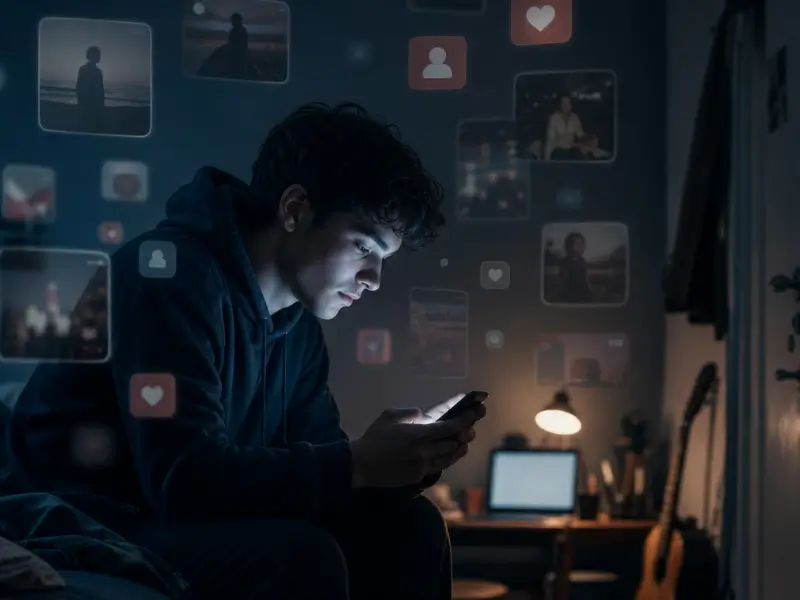
Social media platforms create feedback loops that trigger dopamine releases every time we receive likes, reactions, or stumble across something funny or shocking. This is not a bug in the design. It’s the feature.
The mechanism is called “variable reinforcement” – the same psychological principle that makes slot machines so compelling. You scroll and sometimes you find something amazing, sometimes you don’t. That unpredictability is precisely what keeps you hooked. A recent study in a public health journal describes this as “dopamine-scrolling” – the habitual act of seeking novel, entertaining content through rapid platform-switching and continuous feed consumption.
There’s also what researchers call the “magical maybe” effect. Every phone check might reveal a notification. That “might” is enough to trigger a dopamine spike in anticipation, before you even see anything. Your brain starts craving the possibility of a reward, not the reward itself.
Why Cheap Dopamine Addiction Feels Like Productivity
Here’s the really sneaky part. Cheap dopamine addiction often disguises itself as something useful.
Watching 12 videos about how to build a morning routine feels like working on your morning routine. Reading threads about workout techniques feels like training. Saving recipes feels like cooking. Scrolling through motivational posts feels like getting motivated. But nothing actually gets done.
Psychologists call this “substitution behavior” – when the brain allows content consumption to satisfy the same psychological need that real action would satisfy, without the cost or discomfort of actually doing the thing. You get the dopamine signal of progress without the progress itself. It’s the mental equivalent of eating a picture of food.
This is also why cheap dopamine addiction hits hardest in people who want to do great things. The more meaningful the goal, the more anxiety it creates, and the more tempting it is to replace action with consumption.
The Scale of the Problem
The numbers are genuinely alarming. Over a billion people spent an average of 3 hours scrolling through social media daily in 2020, with some countries reporting self-reported averages exceeding 4 hours per day. That was 2020. Things have only escalated since.
Most teenagers now report being “almost constantly online”, but this isn’t just a teenage problem. Adults are just as affected, maybe more so, because they carry the added guilt of knowing they should be doing other things.
A 2025 study on social media algorithms and teen addiction found that frequent engagement with social media platforms alters dopamine pathways, a critical component in reward processing, fostering dependency over time. In other words, the more you do it, the harder it gets to stop, and the harder it gets to feel satisfied by slower, real-world rewards.
The Real Cost: What You Stop Doing
Cheap dopamine addiction doesn’t just waste time. It actively crowds out the behaviors that lead to actual growth and satisfaction.
When your baseline dopamine is spiked by constant stimulation early in the day, everything else feels boring by comparison. Exercise feels hard. Deep work feels unbearable. Real conversations feel slow. Your threshold for “interesting” gets raised so high that ordinary life can’t clear the bar.
The long-term consequences compound:
- Shorter attention spans – switching between stimuli every few seconds trains your brain to reject anything that takes sustained focus
- Reduced tolerance for discomfort – real goals require sitting with frustration, which becomes increasingly intolerable
- Loss of intrinsic motivation – the internal drive to create, build, and achieve gets quietly eroded
- Anxiety and depression – research consistently links heavy social media use with increased psychological distress
What makes it especially painful is that people often sense something is wrong. They feel vaguely empty, restless, and unproductive, without fully connecting the feeling to the behavior.
Is Cheap Dopamine Addiction “Real” Addiction?
Some researchers are cautious about the addiction label. A 2024 NYT piece notes that dopamine is not the sole factor in addictive behavior, and that the “simplistic neuroscience narrative” about instant gratification can oversimplify the picture.
Fair point. But you don’t need to call it clinical addiction to recognize the pattern: a behavior that gives short-term relief, causes long-term harm, is difficult to stop despite intention to stop, and crowds out healthier alternatives. That pattern is real, and it affects millions of people every day.
Dr. Lembke’s framework is practical: the key question is not whether the label is medically precise, but whether the behavior is serving you or ruling you.
How to Break Free from Cheap Dopamine Addiction
The goal isn’t a “dopamine fast” where you sit in a dark room avoiding pleasure. The goal is a rebalancing: replacing cheap, passive dopamine with earned dopamine from real action.
Practical steps that actually work:
- Create friction for passive consumption. Delete apps from your home screen. Use app timers. Make scrolling take two extra steps. Friction works.
- Start with micro-actions. The anxiety that drives you to consume content is often about feeling overwhelmed. Breaking tasks into the smallest possible steps removes the “I need a break first” trigger.
- Build accountability into your day. Telling another person what you plan to do dramatically increases the chance you’ll do it. Social commitment is a natural, earned dopamine source that’s hard to fake.
- Separate consumption from creation. Give content a time and place. Scheduled consumption is very different from reactive consumption.
- Track what you actually complete. The satisfaction of checking something off – a real task, a real goal – releases dopamine too. Real dopamine. Build habits around that feeling instead.
The brain can be retrained. It just takes consistency, and probably some discomfort at first.
The Bigger Picture
Cheap dopamine addiction is a design problem as much as a personal problem. Platforms are engineered by thousands of engineers specifically to capture and hold attention. You’re not weak for getting caught in that. You’re human.
But awareness is the first lever. Once you can see the substitution happening in real time – “I’m watching videos about running instead of running” – you have a choice that you didn’t have before. And that choice, made consistently, is how people actually change.
Real action is slower. It’s harder. It doesn’t give you the immediate “ahh” that a scroll does. But it gives you something the scroll never will: a life that actually goes somewhere.
Want to take that first step today? Write down one thing you’ve been consuming content about instead of actually doing it. Then do 5 minutes of it. Just 5. Your dopamine system will thank you.